


If you've ever typed "where to sell my phone near me" into a search bar hoping for a quick cash solution, you're in luck. The best places for an instant payout are typically high-street tech shops like CeX, your mobile provider's trade-in desk, and those handy eco-ATMs you see in supermarkets.
These options are all about speed and simplicity, giving you a fast and secure way to turn your old device into money the very same day.
Your Quick Guide to Selling Your Phone Locally
Choosing where to sell your phone in person usually boils down to what you value most: speed, convenience, or getting the absolute best price. Unlike selling online, which involves posting your phone and waiting for the money to clear, local options mean you get paid right there and then.
It’s a bit like choosing between a quick takeaway and cooking a meal from scratch. One is far easier and faster, but putting in a bit more effort yourself might get you more value in the end. This guide will walk you through your choices right on your doorstep.
The biggest draws for keeping your sale local are pretty clear:
- Instant Payment: You leave with cash or store credit in your hand. No waiting around.
- No Posting Hassles: Forget about finding a box, packaging your phone securely, and trekking to the post office.
- Better Security: Selling face-to-face means you're not sharing bank details with strangers online.
Comparing Your Local Options
So, which local route is right for you? This table gives you a quick snapshot of the most common places to sell your phone nearby. Think about what your priority is—are you chasing the highest price, or do you just want the transaction over and done with as quickly as possible?
Comparing Local Phone Selling Options in the UK
As you can see, each of these avenues solves the "where to sell my phone near me" problem, but they're tailored for different situations. Let's dig into the details of each one to see which fits you best.
Get Instant Cash at High Street Tech Shops
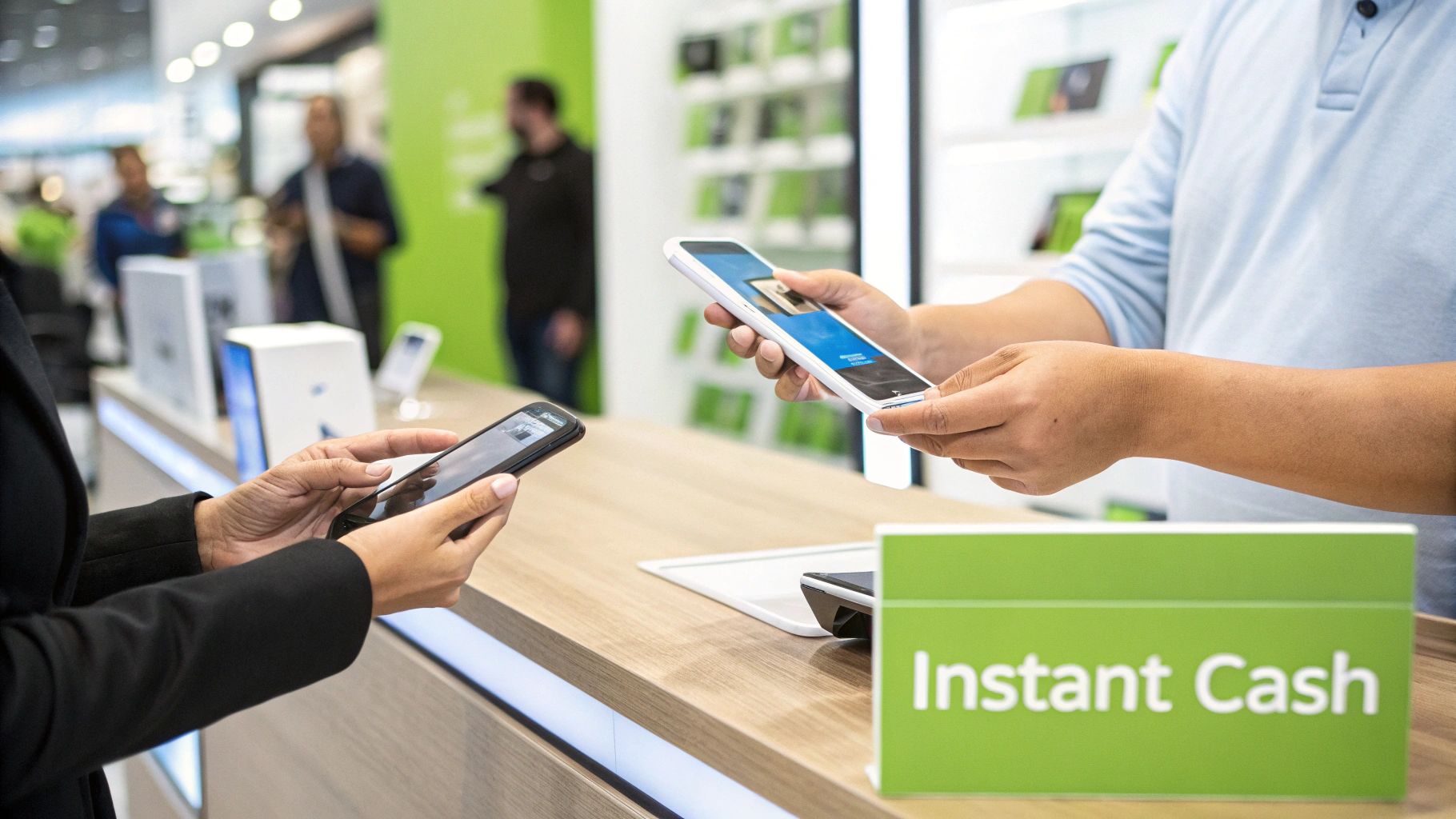
If you need cash in your hand today, sometimes the most straightforward option is to just walk into a high street tech shop. Places like CeX are built for this very purpose, specialising in second-hand electronics and offering a reliable, immediate way to sell your phone without any of the online faff.
The whole thing is designed to be quick. You take your phone to the counter, and a member of staff gives it a thorough check-up right there and then. They'll test it works, check for scratches, and verify its history – all in a matter of minutes.
There's a real sense of security in doing things face-to-face. You don't have to worry about your phone getting lost or damaged in the post, or getting into a dispute with a buyer you've never met. It’s a simple, trusted solution if you're wondering "where can I sell my phone near me?".
How the In-Store Process Works
Getting from phone to cash is refreshingly simple. Think of it as a quick, informal MOT for your device. Before you head out, though, there are a couple of essential steps you need to take to make sure everything goes smoothly.
First, back up your data. All your photos, contacts, and messages should be saved to the cloud or your computer so you don't lose anything important.
Next, and this is crucial, sign out of all your accounts. That means your Apple ID or Google account. This deactivates security features like Find My iPhone, which would make the phone impossible for them to sell. Finally, give it a full factory reset to completely wipe your personal information.
Once you’re in the shop, the staff will:
- Inspect the physical condition: They’ll be looking for any scratches, dints, or screen damage.
- Test core functions: This means checking the battery holds a charge, the camera works, the speakers are clear, and all the buttons respond.
- Grade the phone: Based on its condition, they'll give it a grade (like A, B, or C), which decides the final price.
After this quick assessment, they'll give you an offer on the spot. If you're happy with it, you can walk out with cash or, in some cases, store credit which might be a slightly higher value.
The Trade-Off: Convenience Versus Value
The biggest draw of walking into a shop is the speed. There’s really no faster way to turn an old phone into cash. But that convenience does come at a price.
The offer you receive will almost certainly be lower than what you could get by selling it privately or even through some online phone recyclers. That's because high street shops have overheads like rent and staff wages to think about.
You're essentially paying a little bit for the speed and certainty of an instant, guaranteed sale. For many people, avoiding the hassle of online marketplaces is well worth it. If you need cash fast and are weighing up your local choices, Pawning a Cell Phone for Quick Cash is another avenue worth considering. This approach is best for anyone who values a quick and simple transaction over getting the absolute highest price possible for their old device.
Using Your Mobile Provider's Trade-In Scheme
When it's time for a new phone, one of the most obvious places to look is your current mobile provider. Major UK networks like EE, Vodafone, and O2 all have well-oiled trade-in schemes, making the upgrade path feel incredibly smooth.
The concept is simple. You walk into a local shop with your old handset, and a member of staff gives it a once-over to check its condition and make sure everything works. Based on that, they'll give you a valuation on the spot.
What makes this so appealing is how it all ties together. The value of your old phone is instantly knocked off the price of your new one, either reducing the upfront cost or lowering your monthly payments. You're essentially sorting out two big jobs—selling the old and buying the new—in one quick visit.
Understanding the Terms of the Trade
While you can't beat the convenience, it's really important to know what you're getting into. The "money" you get is almost always store credit, not actual cash. It’s less of a sale and more of a discount on your next purchase with them.
This is a clever model for the networks because it keeps you in their ecosystem. By taking the credit, you're tying yourself to buying your next phone or plan directly from them.
This "lock-in" is the real trade-off here. In exchange for a hassle-free experience, you give up the freedom that comes with having cash in your pocket. The value is tied to that provider, which is fine if you planned on sticking with them anyway, but it stops you from shopping around for a better deal elsewhere.
Is a Provider Trade-In Your Best Option?
These trade-in schemes are a huge part of the UK's second-hand phone market. With an estimated 31% of European consumers selling or trading in their old phones, networks are in a prime position to scoop up a massive share of the 100 million-plus devices that become available each year. In the UK, operators are known for using these deals to lock customers into new agreements, which ensures they get a steady stream of phones and helps keep the value of those devices high. You can discover more insights about the UK's second-hand phone market dynamics.
Before you head to the shop, it’s worth weighing up the good and the bad:
- Pro: Sheer Convenience. It really is the easiest way to handle an upgrade. You walk in with an old phone and walk out with a new one.
- Pro: Special Offers. Networks often run promotions giving you extra trade-in credit if you're upgrading to a specific new handset they want to push.
- Con: No Cash. The value is given as credit, which means you can only spend it with them.
- Con: Often a Lower Payout. The valuation you get from a provider might not be as high as what you could get from an online recycling company or by selling it yourself.
So, who is this for? If your number one priority is a simple, all-in-one process and you have no plans to leave your current provider, it’s a brilliant option. But if your main goal is to get the most cash possible for your old phone, you’ll probably want to check out other avenues first.
Selling Your Phone at Supermarket Eco-ATMs
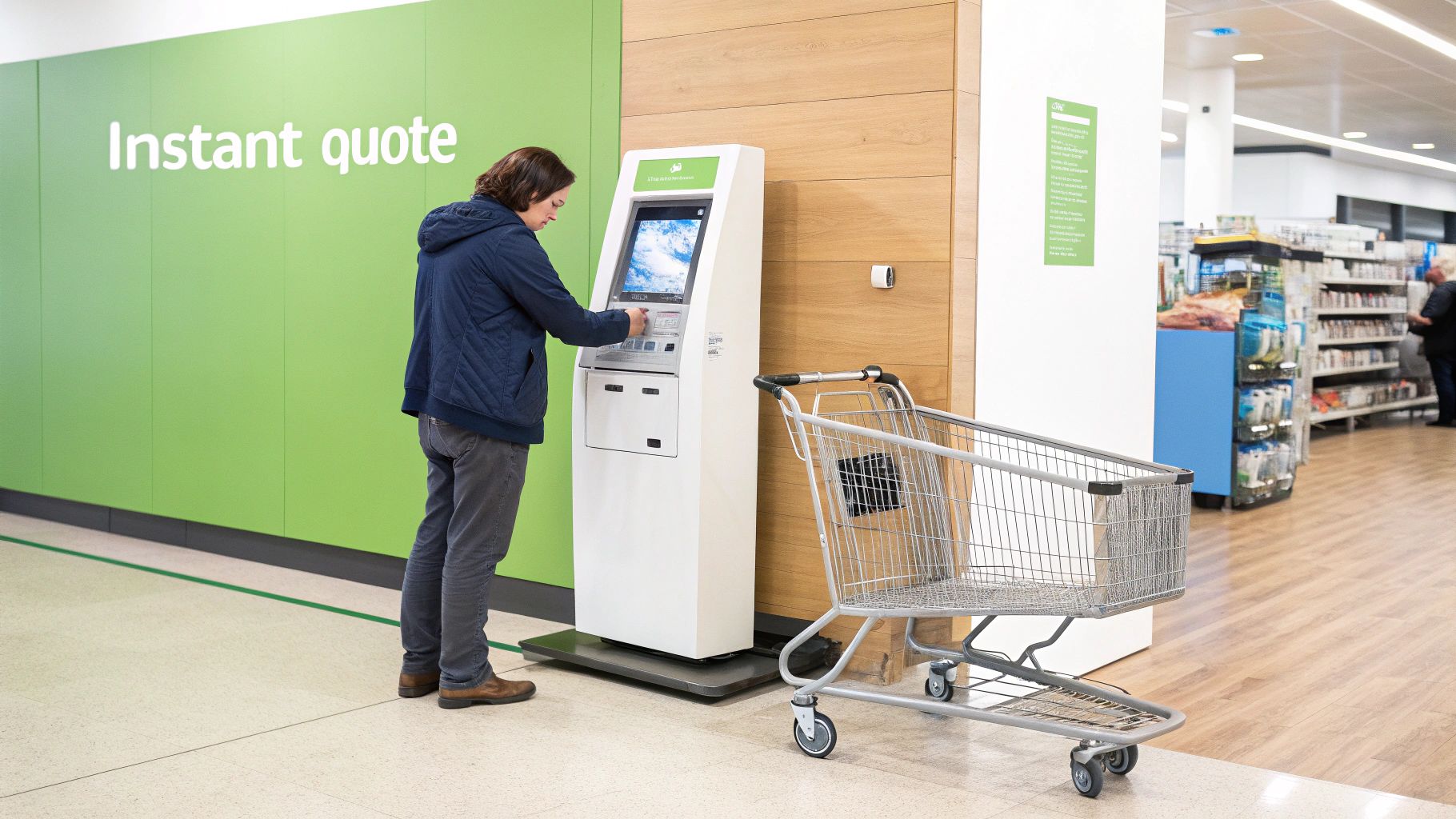
You've likely walked right past one of these in a big supermarket or shopping centre without even noticing. An eco-ATM is a surprisingly slick way to sell your old phone on the spot. It's essentially a reverse vending machine for electronics.
Instead of putting money in to get a snack, you pop your old phone in and get cash out. The whole idea is built around speed and convenience, letting you offload your old device while you’re out doing the weekly shop.
The process is designed to be completely hassle-free. You just follow the prompts on the screen, connect your phone when it tells you to, and let the machine do the rest. No haggling, no people—just a simple transaction.
How the Kiosk Process Works
The machine handles everything from start to finish. It walks you through a few quick steps to value your phone and gives you an instant, no-obligation offer.
First, you’ll place your phone in a special bay where cameras and software check its physical condition. The machine is looking for any obvious issues, like a cracked screen or deep scratches on the casing.
Next, it gives you a cable to plug into your phone. This lets it run a few quick diagnostic checks to confirm the model, its storage capacity, and that it powers on properly.
Within a minute or two, a cash offer appears on the screen. If you like the price, you accept it, and the machine dispenses the cash right there and then. If you think the offer is too low, you just decline and take your phone back. Simple as that.
The Pros and Cons of Eco-ATMs
The biggest draw here is pure, unmatched convenience. You won’t find a faster way to sell your phone for immediate cash. It's the perfect choice if you just want the job done with zero fuss.
But that convenience comes at a price. Eco-ATMs are notorious for offering less money than almost any other selling method. In fact, research suggests their offers can be as much as 55% lower than what you’d get from an online buyback service.
The automated system has to build in a hefty margin to cover its costs and make a profit, and that’s directly reflected in the low offers. You might also find that the machines won't accept very old phones or less common models.
Still, these kiosks play a key role in the UK’s thriving refurbished phone market. With around 15.4% of UK consumers buying a refurbished mobile in 2025, there's a constant need for used devices, and these machines are one way they enter the supply chain. You can discover more insights about the UK mobile market in 2025 to see the bigger picture.
Ultimately, eco-ATMs are for people who value their time more than getting the absolute top price. If you have a popular phone model and want cash in your hand in less than five minutes, it’s a brilliant answer to the question "where can I sell my phone near me?".
Getting Your Phone Ready to Sell Locally
Before you even think about where to sell your phone, a little prep work can make a huge difference. Not only can it help you get a better price, but it’s absolutely crucial for protecting your personal data. It’s a bit like detailing your car before you sell it – a clean, well-maintained item is always more appealing and signals a smooth, hassle-free deal.
First things first, let’s talk about presentation. Give your phone a good physical clean-up. A microfibre cloth is perfect for wiping away all those smudges and fingerprints on the screen and body. For the fiddly bits like the charging port and speaker grilles, a soft brush or even a wooden toothpick can carefully remove any trapped dust and lint. A phone that looks looked-after immediately gives a better impression.
Secure Your Digital Life
Now for the most important part: safeguarding your data. You absolutely must ensure that none of your personal information is left on the device when it changes hands. This isn't just a friendly tip; it's a critical security step.
You'll want to start by backing everything up. Losing years of photos, contacts, and messages is a nightmare nobody wants to deal with.
- Back-Up Your Data: Use a service like Apple's iCloud or Google Drive to create a complete backup of your phone. This makes it a breeze to restore all your stuff onto your new device.
- Remove SIM and Memory Cards: Pop out your SIM card. If your phone has a microSD card slot for extra storage, make sure you take that out too.
The single most important step is signing out of your accounts. If you don't, security features like Apple's Activation Lock or Google’s Factory Reset Protection can make the phone completely unusable for the new owner.
On an iPhone, just head to Settings, tap your name right at the top, and sign out of your Apple ID. For Android users, go into Settings, then find 'Accounts' and remove your Google account. This one small action will save you and the buyer from a world of frustration.
Perform a Final Factory Reset
Once you're 100% sure everything is backed up and you’ve signed out of your key accounts, it's time for the final wipe. A factory reset erases every single piece of data and all your settings, taking the phone back to the state it was in when it first came out of the box.
You'll find this option in your phone’s settings, usually under a "General" or "System" menu. This step can't be undone, so double-check that you've done everything else first. A factory reset gives you complete peace of mind that your digital life is safe and provides the buyer with a fresh start, setting you up for a quick and successful sale.
Choosing Between Local Buyers and Online Recyclers
So, where should you sell your phone? It really boils down to a classic dilemma: do you want the most cash in your pocket, or do you want the fastest, simplest sale possible? That’s the fundamental difference between selling to an online recycler and sticking with a local, in-person buyer.
There’s no single "best" answer here. The right choice for you depends entirely on what you value most.
Think of it like selling a car. You could go through the effort of a private sale online to get a better price, which means handling listings, answering questions, and arranging viewings. Or, you could just part-exchange it at a dealership—less money, but it’s done and dusted in one quick, hassle-free visit. Online phone recyclers are your private sale; local buyers are that convenient dealership.
Speed and Convenience Versus Maximum Value
Local buyers—like the high street shops and kiosks we’ve looked at—are all about speed. You can literally walk in with your old phone and walk out with cash in your hand, often in under an hour. No faffing about with packaging, no trips to the post office, and no waiting for a bank transfer to clear. It’s an immediate and secure solution.
On the flip side, online recyclers nearly always offer more money. Because they don't have the massive overheads of running physical shops, they can pass more of that value on to you. The only catch is that the process takes a bit longer. You'll need to post your phone and wait for their team to inspect it before they send your payment, which usually takes a few days.
This handy flowchart breaks down the key steps to take before you sell, no matter which route you choose.
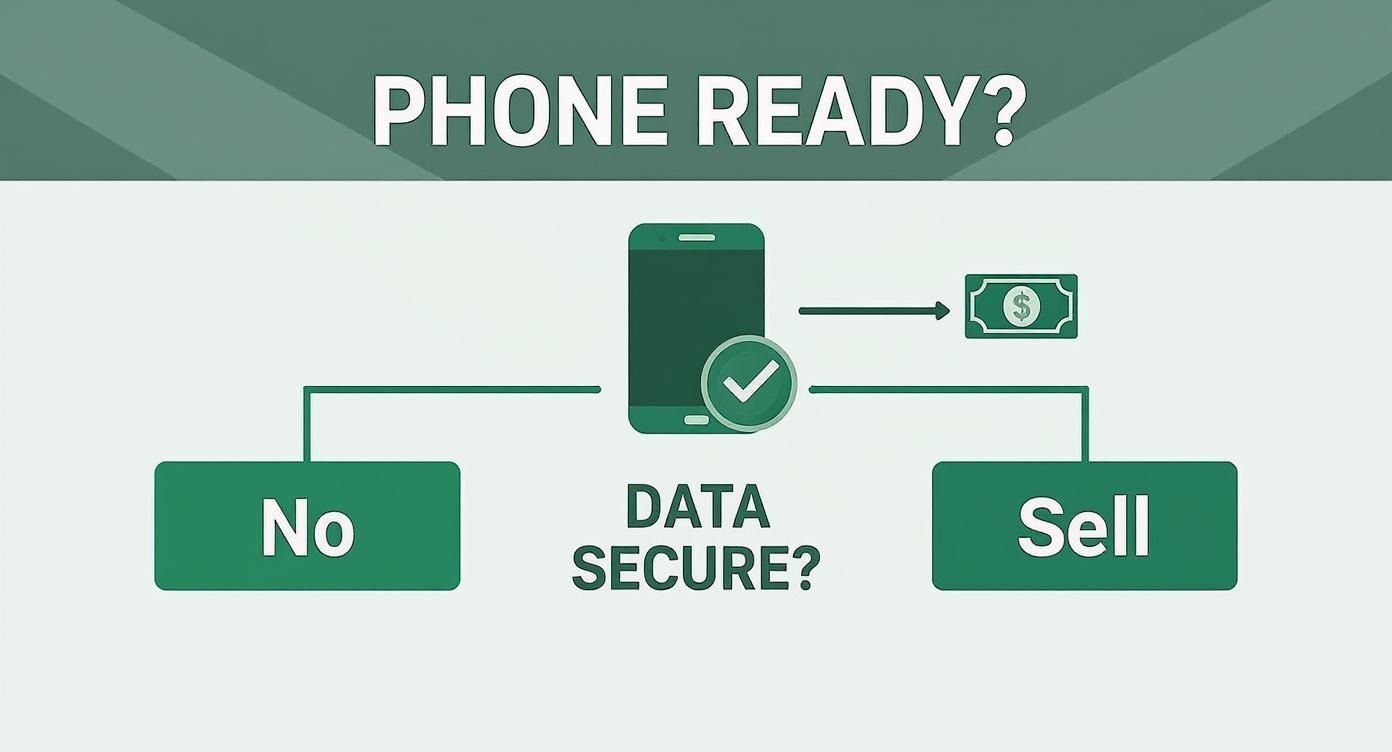
As you can see, backing up and wiping your data is a crucial first step, regardless of where you end up selling.
Local Sale vs Online Recycler: Which Is Right for You?
To help you decide, let's break down the main differences in a simple head-to-head comparison. Think about what matters most to you—is it the final price, how quickly you get paid, or something else entirely?
Ultimately, both are great options. A local sale is perfect for anyone who needs money right away or just wants the whole thing over and done with quickly. An online recycler is the smarter move if you're not in a rush and want to get the best possible return on your old device.
Making an Informed Choice
The UK has a massive second-hand phone market, which is great news for sellers. With 71% of UK consumers now upgrading their phones every three years, there's a constant flow of devices fuelling both local and online resale channels, which helps keep the offers competitive.
If you're thinking of selling on a marketplace yourself, making your listing stand out is key. Getting your photos right is a big part of that, and guides like Mastering eBay Photo Size for Better Sales can make a real difference to your final sale price.
The Bottom Line: If you need cash today and want to avoid any potential hassle, a local buyer is your best bet. If you can wait a few days and want to squeeze every last pound of value from your old phone, an online service will almost certainly pay you more.
Got Questions About Selling Your Phone? We've Got Answers
When you start searching for "where to sell my phone near me," it's natural for a few questions to pop up. Let's tackle some of the most common ones so you can sell with confidence.
Is an unlocked phone really worth more?
In a word, yes. An unlocked phone isn't tied to a specific mobile network like Vodafone or O2. This freedom makes it a much hotter ticket for potential buyers, as they can pop in any SIM card they like.
Because of that flexibility, you can expect a better offer. More demand almost always means more money in your pocket.
What if my phone is damaged? And do I need the original box?
Don't worry, you can definitely sell a phone with a cracked screen, a tired battery, or other cosmetic issues. The key thing to remember is that the offer will be lower to cover the cost of repairs.
The best policy is to be completely honest about any damage. Every shop and kiosk will test the phone thoroughly anyway, so being upfront from the get-go just speeds things up and gets you a realistic quote faster.
Lots of people think they can't sell their phone without the original box and charger. While having them might add a couple of quid to your offer at a high street shop, it’s almost never a deal-breaker. A missing box shouldn't stop you from selling.
So, where's the best local spot to get the most cash?
If getting the highest possible price is your main goal, a specialised, independent buyer is your best bet. Supermarket kiosks and big high street chains are certainly convenient, but their business model often means they pay out less.
To get the best price in your area, here’s what to do:
- Shop around: Never accept the first offer. Get a few quotes to compare.
- Read the reviews: See what other sellers are saying about their experiences.
- Find a specialist: A shop that focuses purely on tech has the knowledge to give you a fair price based on its real market value.
For a fast, fair, and secure way to sell your tech for more, EXE offers a premium buyback service. We provide free collection, instant payment, and consistently beat high-street offers. Get your free, no-obligation quote today at https://www.exe.co.uk.